

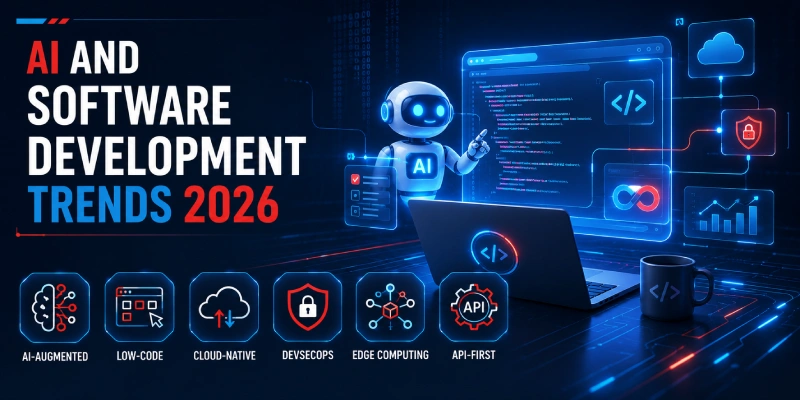
SOFTWARE DEVELOPMENT TRENDS
Businesses Should Watch in 2026
Discover the top software development trends of 2026 - from AI-driven development to edge computing - and what they mean for your business strategy.
Why These Trends Matter in 2026
The software development landscape is evolving at an unprecedented pace. As businesses race to remain competitive in an increasingly digital-first economy, staying informed about the latest software development trends in 2026 is no longer optional - it is a strategic necessity.
From artificial intelligence rewriting how code is built to edge computing pushing performance boundaries, this year marks a pivotal shift in how organisations design, develop, and deploy software. Whether you are leading a digital transformation initiative or simply evaluating your current technology stack, understanding these trends can mean the difference between falling behind and leading the market.
This guide breaks down the most critical software development trends for 2026, providing clear insights and practical takeaways that businesses can act on today.
Top Software Development Trends to Watch in 2026
Below are the six most impactful software development trends shaping technology strategy and business outcomes this year. Each section provides context, key data points, and practical implications.
AI-Augmented Software Development
Artificial intelligence has moved beyond being a productivity buzzword. It is now embedded directly into the software development lifecycle - assisting developers with code generation, automated testing, bug detection, and performance optimisation.
Low-Code and No-Code Platform Expansion
Low-code and no-code development platforms continue to gain enterprise traction in 2026. These platforms allow business users and citizen developers to build functional applications with minimal hand-written code, drastically reducing development timelines and costs.
Cloud-Native Development and Microservices Architecture
Cloud-native development has become the default approach for building modern, scalable applications. By leveraging microservices, containerisation (Docker, Kubernetes), and serverless computing, organisations are achieving unprecedented levels of agility and resilience.
DevSecOps - Security Embedded Into Development
In 2026, cybersecurity can no longer be treated as an afterthought. DevSecOps - the integration of security practices directly into the DevOps pipeline - is becoming a non-negotiable standard for responsible software development.
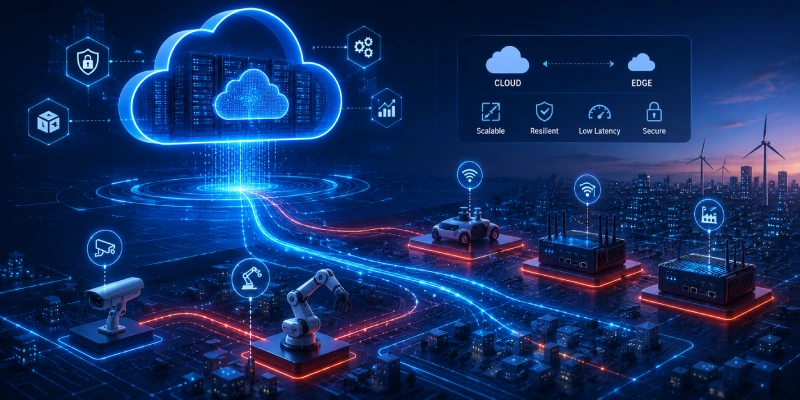
Edge Computing and Distributed Software Architecture
Edge computing is transforming how applications are architected and deployed. Rather than relying solely on centralised cloud servers, edge computing processes data closer to its source - resulting in dramatically lower latency and improved real-time performance.
API-First Development and Platform Engineering
API-first development has emerged as the architectural philosophy of choice for businesses building scalable, interoperable digital products. Rather than treating APIs as an afterthought, organisations are designing them as the primary interface from day one.
A Practical Framework for Adopting 2026 Software Trends
Identifying trends is only part of the challenge. The real value lies in knowing how to act on them. Here is a straightforward, five-step adoption framework for organisations at any stage of digital maturity.
Audit
Assess your current technology stack, team capabilities, and business goals. Identify gaps, redundancies, and quick-win opportunities before committing to any new trend.
Prioritise
Not every trend is relevant to every business. Align adoption decisions with your specific industry, customer needs, and growth strategy.
Pilot
Run small-scale pilots before full commitment. Test AI tools, low-code platforms, or DevSecOps frameworks in a controlled, low-risk environment first.
Scale
Once a pilot demonstrates ROI, build a formal rollout plan with defined KPIs, timelines, and allocated resources.
Iterate
Software development is never static. Continuously monitor evolving trends, collect feedback, and refine your approach each quarter.
Key Insight for 2026
Businesses that combine AI-augmented development with cloud-native architecture and embedded security practices are not just building better software - they are building a sustainable competitive advantage.
The goal is not to adopt every trend simultaneously. Select and implement the ones most aligned with your business strategy, customer needs, and long-term technology roadmap.
Frequently Asked Questions
AI-augmented development is widely considered the most transformative trend of 2026. Tools powered by generative AI are accelerating coding speed, reducing bugs, and enabling more developers to contribute to complex projects. Combined with cloud-native development and DevSecOps, it forms the cornerstone of modern software engineering.
Low-code and no-code platforms are particularly beneficial for SMBs, enabling application development without large engineering teams. Cloud-native tools and serverless architectures also reduce infrastructure costs, making enterprise-grade capabilities accessible at any scale.
Not at all. DevSecOps practices are scalable and important for businesses of all sizes. With cyber threats rising and compliance requirements tightening globally, integrating security into the development pipeline is a best practice for any organisation that develops or manages software.
Low-code platforms require some coding knowledge and offer greater flexibility for complex use cases. No-code platforms are designed for non-technical business users. Both enable faster application development, but the right choice depends on project complexity and team skill level.
Edge computing changes where and how applications run. Developers building for edge environments must account for distributed processing, offline functionality, data synchronisation, and low-latency requirements. As IoT and 5G expand, edge-native development skills will become increasingly valuable.
Reliable sources include Gartner (gartner.com), Forrester Research (forrester.com), the Stack Overflow Developer Survey, GitHub Octoverse (github.blog), and the Cloud Native Computing Foundation (cncf.io). These publish data-driven, annually updated industry insights.
The Future of Software Development
The software development trends of 2026 represent more than technical evolution - they are redefining how businesses create value, serve customers, and compete in the marketplace. From the intelligent code assistance of AI-augmented development to the distributed power of edge computing, these trends collectively point toward a future where software is faster, smarter, more secure, and more accessible than ever before.
Businesses that proactively assess and adopt the right trends today will be far better positioned to meet the challenges and opportunities of tomorrow. The key is not to chase every innovation, but to build a thoughtful, strategic approach that aligns technology adoption with genuine business outcomes.
Ready to Build Smarter in 2026?
Whether you are adopting AI-driven development, modernising with low-code platforms, or securing your DevOps pipeline - the time to act is now.
Explore Our Services